
Last updated September 23, 2026
Free visual inspection and a written scope of work before any mitigation begins - photos, moisture readings, and drying logs go in your claim file
The scope we write is the scope we bill. Anything new gets shown to you, in writing, before we touch it.



 Before
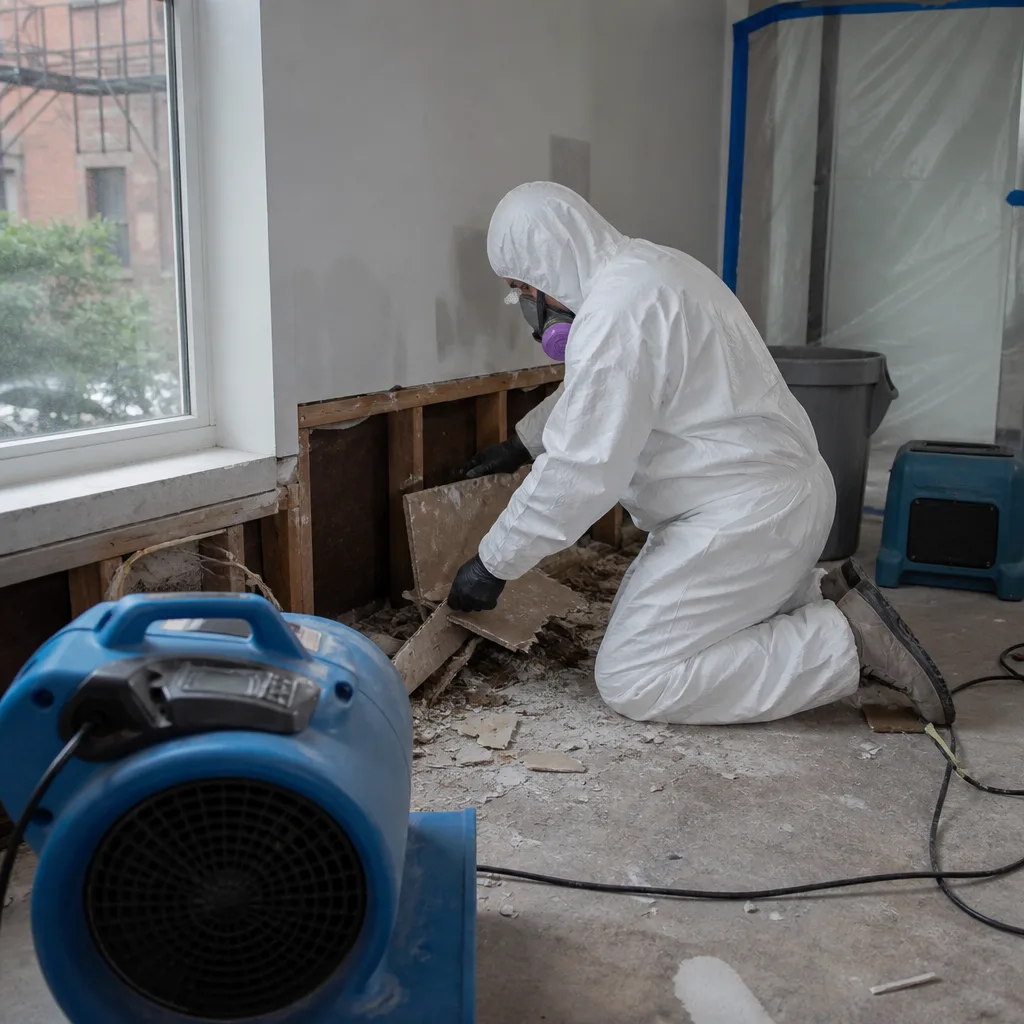 After
After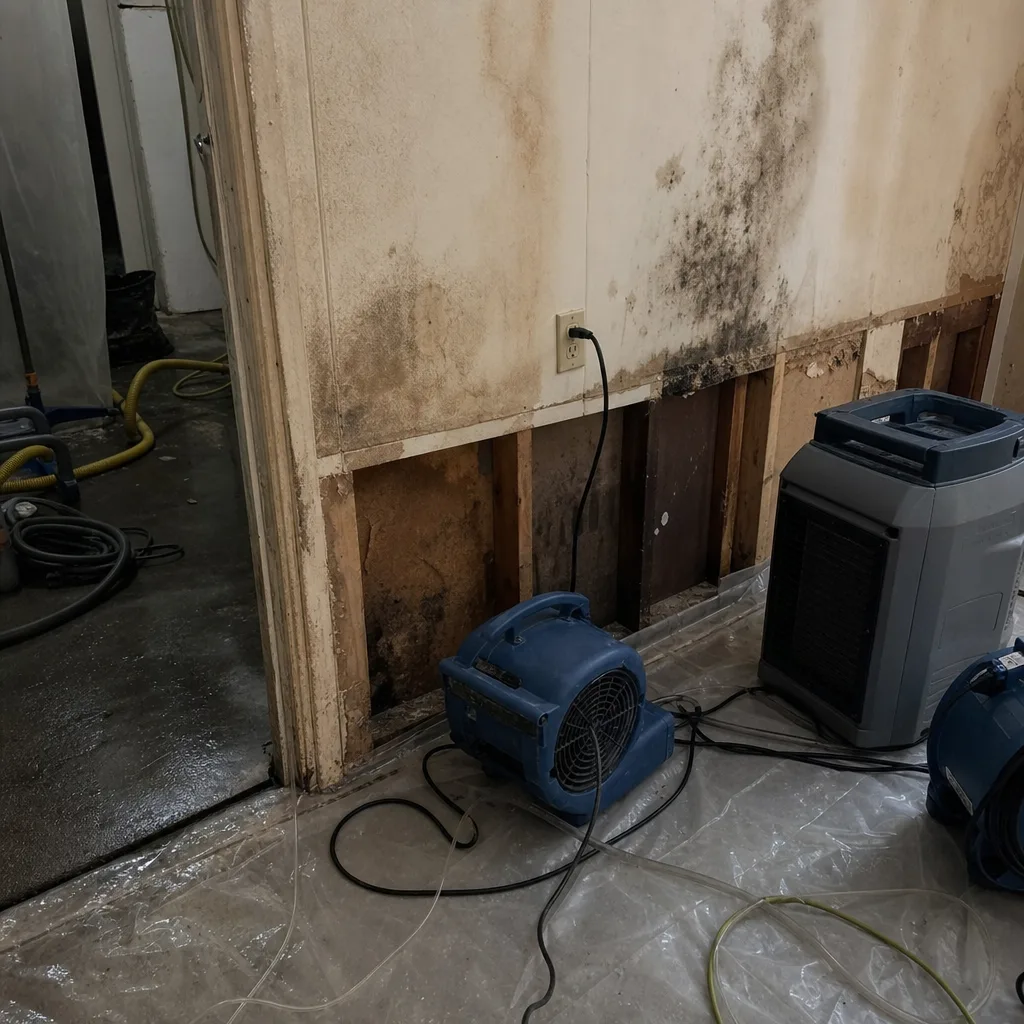 Before
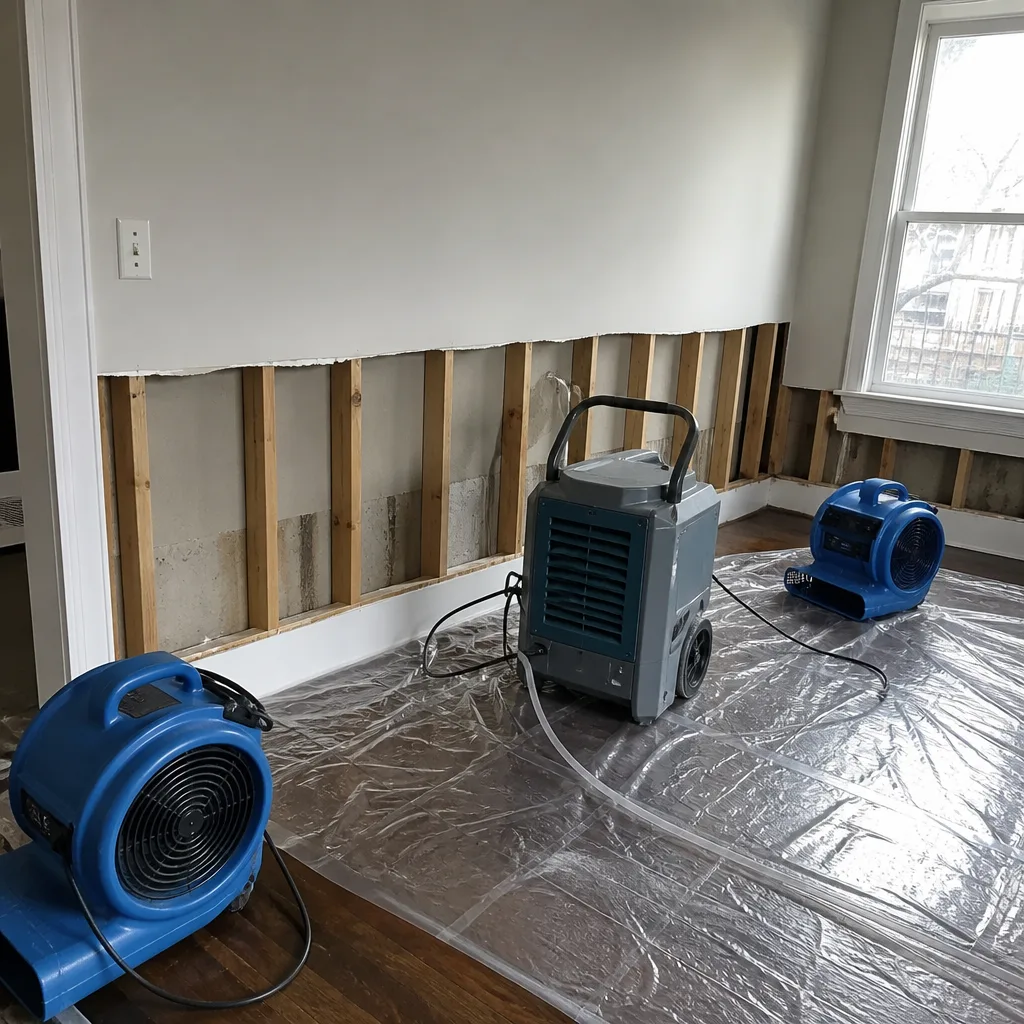 After
After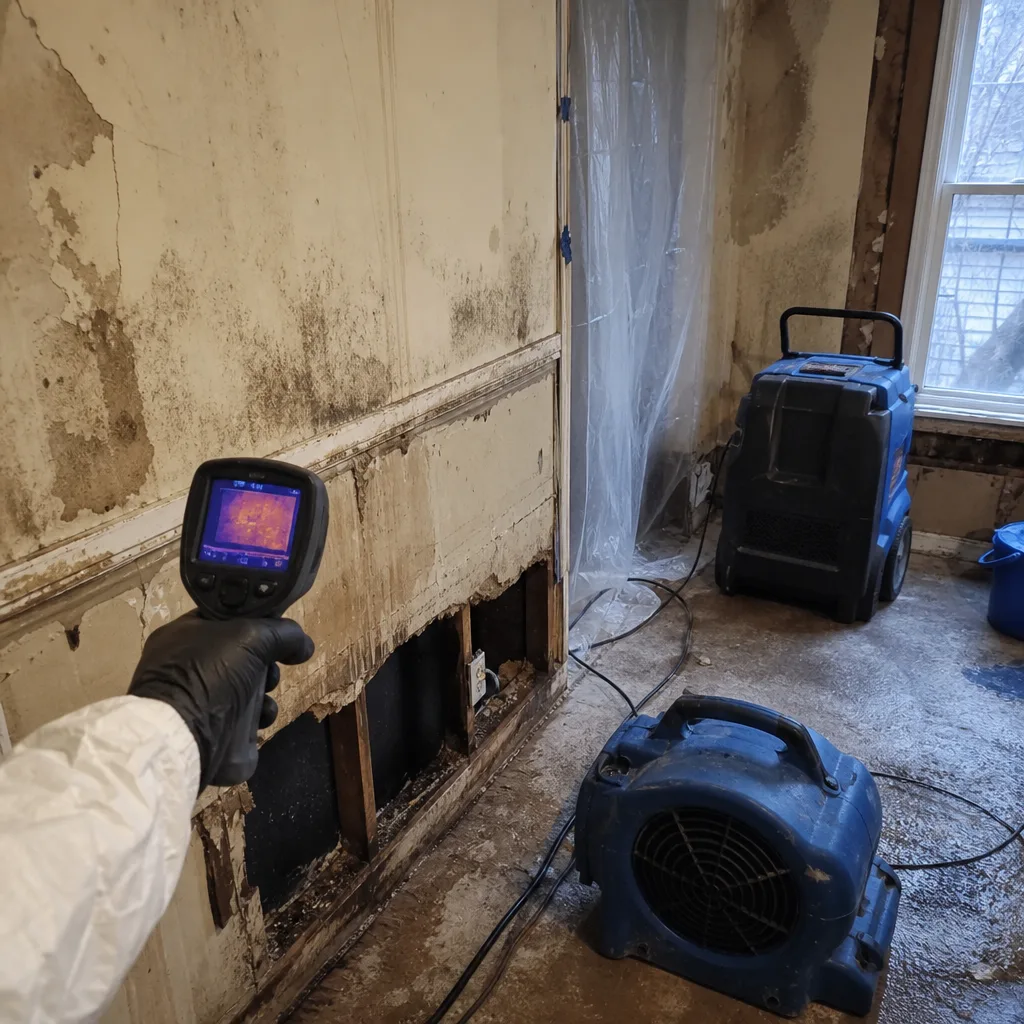 Before
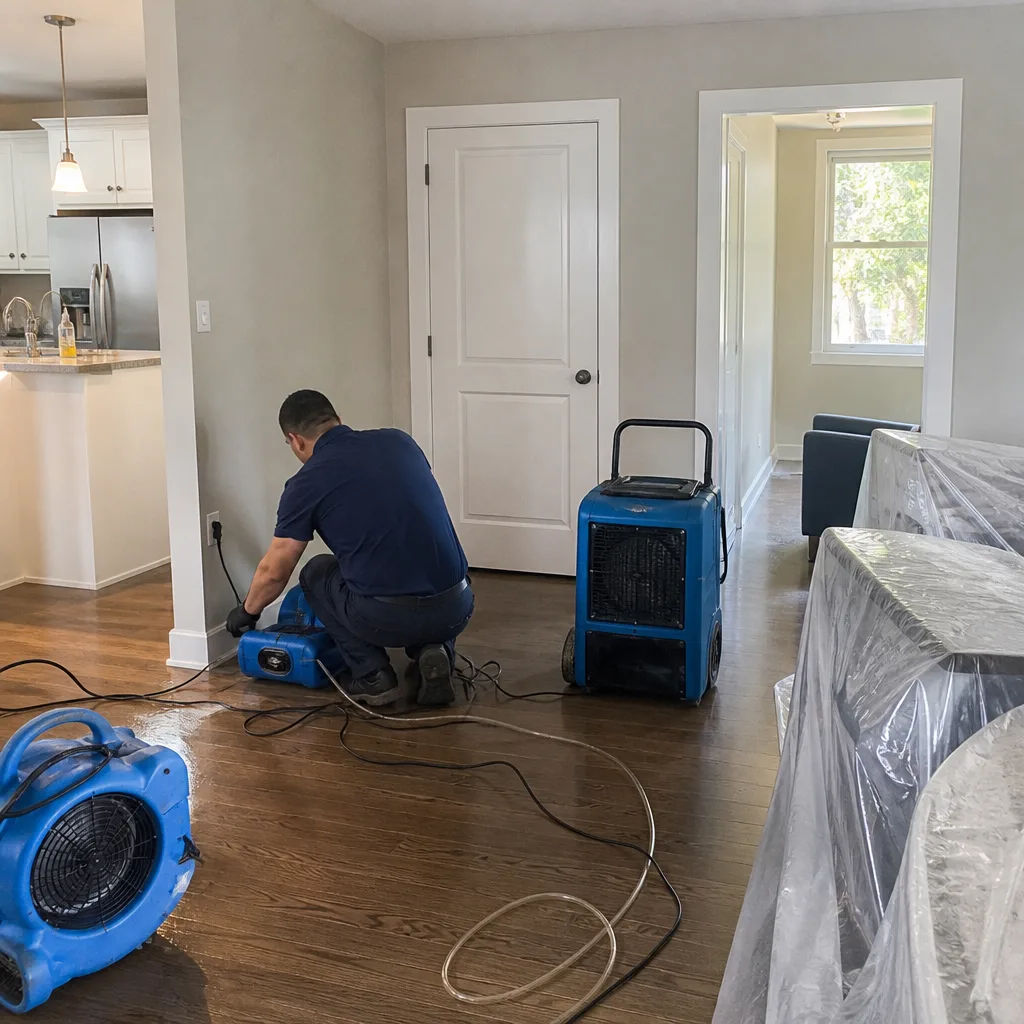 After
AfterDamage Restoration Warning Signs: A Hoboken Homeowner’s Reference Guide
A musty smell in a Hoboken basement has a moisture reading behind it, and that reading, not the smell, is what separates a ventilation issue from an active leak. Contractors who quote from smell alone are quoting blind. In our experience across more than 12,000 homes since 2011, the warning signs homeowners miss aren’t subtle at all. They’re misread because most guides teach you to look at stains and warping when the real diagnostic is a number: 17% moisture content in drywall means active damage; 10% means old damage worth monitoring. This guide will teach you to read measurements, not just surfaces, so you know when to act, when to watch, and when to call for documentation that protects your insurance claim. For more guides & resources, see our full library.
Quick Answer
The most critical damage restoration warning signs in Hoboken homes are moisture readings above 17% in drywall or wood, humidity sustained above 60% for more than 48 hours, and any visible water sign paired with a musty odor. A $30 pin-type moisture meter will tell you whether that stain is history or an active problem. If the reading is elevated, document it with a dated photograph and call a restoration professional within 24 hours to protect both your structure and your insurance coverage. Not sure who to call? Read our How to Hire a Damage Restoration Contractor in Hoboken: A Step-by-Step Guide first.
Table of Contents
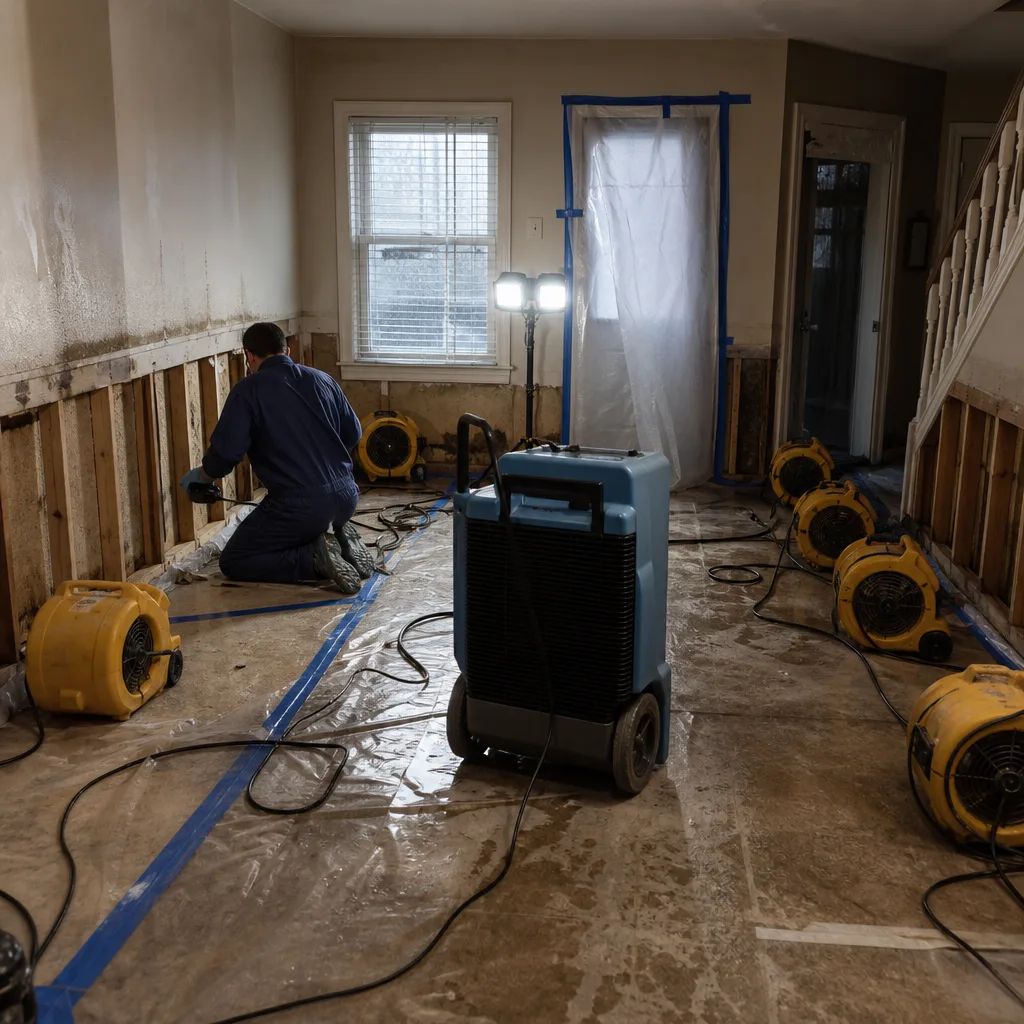
- Water Damage Warning Signs: What the Numbers Actually Mean
- Mold Warning Signs Specific to Hoboken Housing Stock
- Fire and Smoke Damage: Early Indicators Before the Alarm
- Storm and Disaster Warning Signs by Hoboken Season
- Sewage and Biohazard: When Smell Becomes a Safety Signal
- What You Can Measure Yourself vs. What Requires Professional Detection
- Insurance Documentation: Warning Signs That Trigger Your Duty to Report
- The Documentation Habit That Protects Your Claim
BeforeAfterWater Damage Warning Signs: What the Numbers Actually Mean
Every visible water sign tells two stories: what happened and what’s happening now. The difference lives in a moisture reading. Here’s how to interpret what you’re seeing.
Stains on Ceilings and Walls
A yellow-brown stain with a moisture reading of 10% or below is historical damage. The leak is resolved, and the stain is cosmetic. The same stain with a reading of 17% or higher means water is still moving through that material. In Hoboken’s pre-war buildings with plaster-and-lath construction, we’ve seen active readings as high as 35% in ceiling stains where the leak originated three floors above and traveled down a pipe chase.
Pin-type moisture meters read differently by material. For drywall, normal is 5-12%; 13-16% warrants investigation; 17%+ indicates active water intrusion. For hardwood flooring, normal is 6-12%; readings above 16% mean the wood is actively absorbing moisture and will begin to cup or crown within days.
Buckling Hardwood Floors
In Hoboken’s ground-floor and garden-level units, buckling hardwood is often the first visible sign after a neighbor’s pipe failure. The critical measurement isn’t the buckle itself. It’s the moisture content in the subfloor beneath it. A pin meter with extendable probes can reach through floorboard gaps to read the plywood or pine subfloor directly. Subfloor readings above 20% mean the moisture source is ongoing and the finish floor is at risk of permanent deformation.
We’ve documented cases on Garden Street and Willow Avenue where subfloor readings of 28% persisted two weeks after a visible leak was repaired, because water had pooled in the building’s sleeper system and had no evaporation path. Without a meter, that floor looks dry on top. The buckle might even settle. The subfloor tells the truth.
Efflorescence on Masonry
White, powdery crystalline deposits on brick or stone foundations indicate water-soluble salts being drawn through the masonry by capillary action. In Hoboken’s brownstone and limestone row houses, efflorescence on basement walls is common, but its meaning depends on whether the wall is actively damp to the touch. Press a moisture meter probe directly into the powdery area. Readings above 15% in the mortar joint behind the efflorescence mean hydrostatic pressure is actively pushing water through the foundation. Readings below 12% suggest past moisture movement that has stabilized.
Efflorescence itself is not structural damage. It’s a warning sign that your foundation is breathing moisture. The reading behind it determines whether that breathing is a ventilation problem or an active water management failure.
Condensation Patterns
Condensation on windows, pipes, or ductwork is a humidity signal, not a leak signal. Measure the relative humidity with a hygrometer. Sustained readings above 60% RH create conditions for mold growth on organic surfaces. Above 70% RH, dust mites proliferate and wood begins to absorb moisture from the air. The fix is ventilation or dehumidification, not water damage restoration, unless condensation has already led to secondary damage.
In Hoboken’s pre-war units with original double-hung windows, we’ve measured interior humidity of 75% RH in January when storm windows are missing and steam heat runs unchecked. The condensation on those windows isn’t a leak. It’s a building science problem with a building science solution.
- Stain + 10% reading: Historical damage, monitor annually
- Stain + 17% reading: Active leak, investigate source within 48 hours
- Stain + 25% reading: Saturated material, begin drying protocol immediately
- Buckle + subfloor 20%+: Ongoing moisture, risk of permanent floor damage
- Efflorescence + 15% mortar: Active hydrostatic pressure, foundation drainage issue
- Condensation + 60%+ RH sustained: Ventilation/dehumidification needed, not restoration
Mold Warning Signs Specific to Hoboken Housing Stock
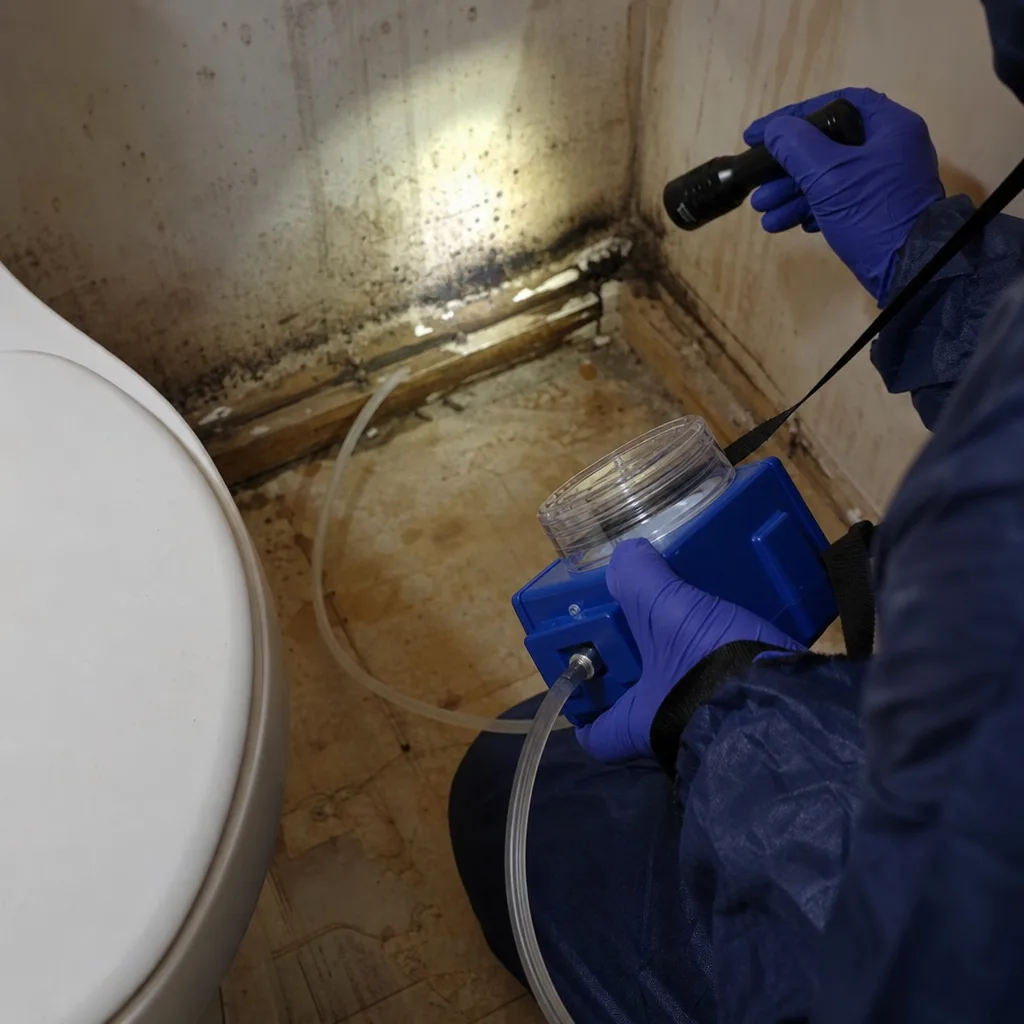
Hoboken’s housing stock, built largely between 1870 and 1930 with significant infill from the 1980s onward, creates mold risk profiles that differ from suburban construction. Understanding your building type tells you where to measure.
Pre-War Masonry Construction
Brick and stone row houses with plaster walls have no vapor barrier between exterior masonry and interior finish. When exterior humidity rises or interior air conditioning creates a temperature differential, moisture condenses inside the wall cavity. The warning sign is often a darkening of plaster near exterior corners, particularly on north-facing walls. A pin meter reading of 15% or higher in the plaster, paired with a musty odor, indicates mold-conducive conditions even if no visible mold is present.
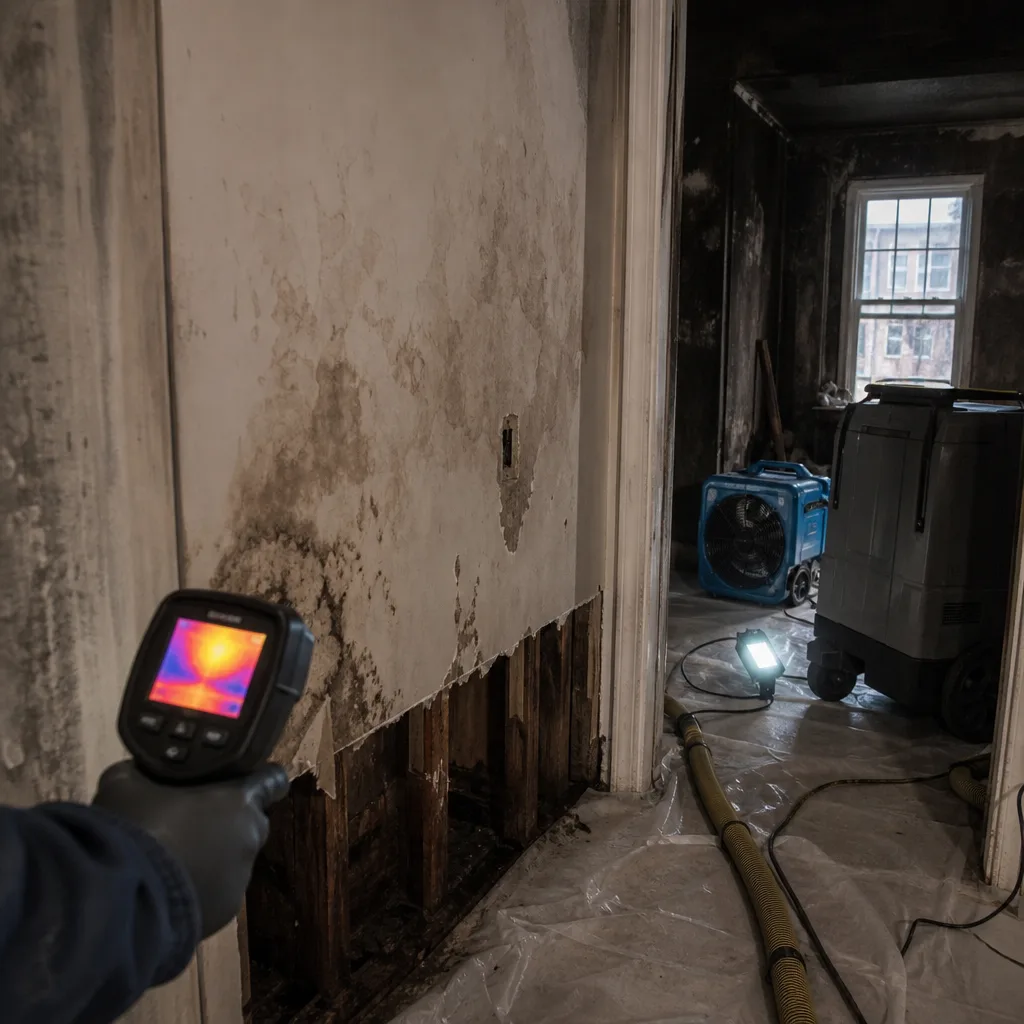
We use thermal imaging to detect the temperature differential that precedes visible mold by weeks or months. A professional-grade FLIR camera will show a 4-degree Fahrenheit or greater temperature difference at the corner, indicating the dew point is being reached inside the wall. That’s the measurement that matters. The dark spot comes later.
Post-War and Infill Construction
Buildings from the 1960s through 1990s often have gypsum drywall with paper facing, vapor barriers of varying quality, and cavity insulation that can trap moisture. The warning sign here is blistering paint or wallpaper near window heads and sills, where thermal bridging creates cold spots. Moisture meter readings above 16% in drywall with blistering indicate the paper facing is wet and mold growth is likely within 48-72 hours if conditions persist.
Converted Industrial and New Construction
Hoboken’s converted warehouses and newer high-rises have different risk profiles: flat roof assemblies with membrane penetrations, and HVAC systems with condensate drains that can back up. The warning sign is water staining on ceiling tiles or around diffusers. Ceiling tile saturation readings above 20% mean the leak is active and the tile is a mold growth medium. We document these with photo records showing the stain, the meter reading, and the date, because ceiling tile replacement is often disputed by insurers who claim the damage is cosmetic.
Mold Remediation in Hoboken requires documentation of the moisture source, not just the visible growth. Our protocols follow IICRC S520 standards, with daily moisture logs that establish the remediation timeline for adjuster review.
The Musty Smell Measurement
A musty smell is volatile organic compounds (VOCs) released by active microbial growth. It is not a reliable indicator of severity. We’ve measured environments with strong musty odors and airborne spore counts within normal range, and environments with no detectable odor and spore counts 50 times above outdoor baseline. The measurement that confirms active mold is: moisture reading above 16% in organic material, plus a relative humidity above 60%, plus a temperature between 60-80°F. All three conditions must be present for sustained growth.
If you smell mustiness, measure first. A $30 moisture meter and a $15 hygrometer will tell you whether you’re dealing with a ventilation issue or an active mold condition that requires professional remediation with documented drying logs. Still weighing your options? Our DIY vs Professional Damage Restoration: The Hoboken Homeowner’s Decision Guide breaks down when to handle it yourself and when to call in experts.
Fire and Smoke Damage: Early Indicators Before the Alarm
Not all fire damage begins with flames. The warning signs of pre-ignition conditions, and of smoke damage that accumulates before any alarm sounds, are measurable and documentable.
Electrical Pre-Ignition Indicators
Discoloration on outlet covers, switch plates, or junction box covers indicates resistive heating from loose connections or overloaded circuits. A non-contact infrared thermometer will show elevated temperatures: outlet covers should read within 2 degrees of ambient wall temperature. Readings 10 degrees or more above ambient indicate a connection that is degrading and poses ignition risk. In Hoboken’s older buildings with original knob-and-tube wiring still active in some walls, we’ve measured outlet temperatures 25 degrees above ambient where insulation had degraded and conductors were arcing intermittently.
Any outlet that feels warm to the touch, or that produces a buzzing or sizzling sound, warrants immediate de-energization and inspection by a licensed electrician. Document the temperature reading with a photograph for your insurance file before calling.
Smoke Residue Accumulation
Protein smoke from kitchen fires, and soot from candle or fireplace use, accumulate on surfaces before becoming visible as discoloration. The early warning sign is a tacky or greasy film on cabinets, walls, and ceilings near cooking areas. A simple test: wipe a white paper towel across the surface above your stove. Yellow or brown residue indicates accumulated smoke particulate that is acidic and will etch painted surfaces over time.
The measurement here is not a number but a rate of accumulation. If you’re cleaning visible residue monthly, the source, ventilation, or cooking practice needs adjustment. Persistent protein smoke residue can require professional cleaning with alkaline detergents followed by sealing, documented to IICRC S730 standards for fire and smoke damage restoration.
HVAC- Distributed Smoke
In buildings with shared HVAC systems, smoke from one unit can distribute through common ductwork. The warning sign is a persistent odor in multiple rooms that doesn’t correlate with any local source, or discoloration around supply vents. We use particle counters to measure airborne particulate levels and compare them to outdoor baseline. Elevated PM2.5 and PM10 readings with no outdoor source indicate distributed contamination that requires duct inspection and cleaning documented to NADCA standards.
Fire & Smoke Damage Restoration in Hoboken addresses both the visible damage and the particulate that settles in HVAC systems and wall cavities. Our documentation includes pre- and post-cleaning particle counts for adjuster review.
Storm and Disaster Warning Signs by Hoboken Season
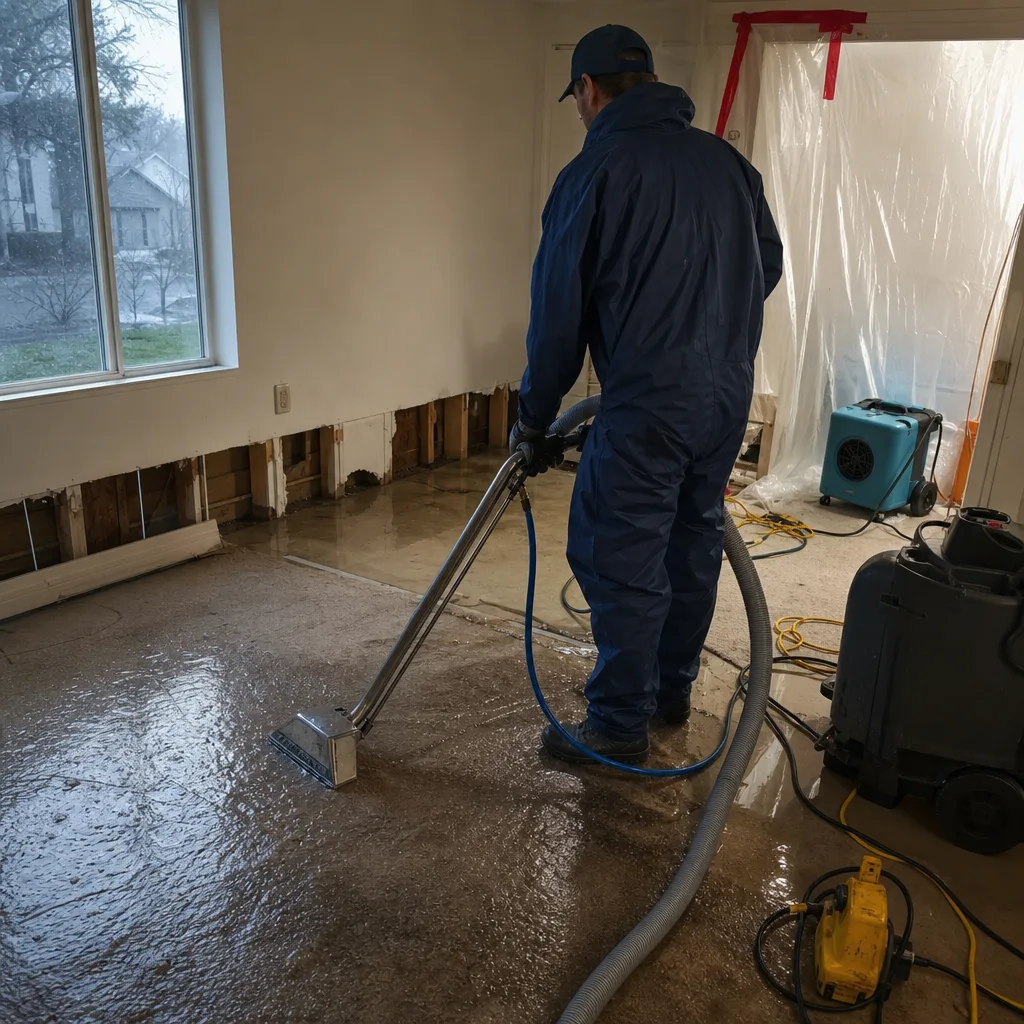
Hoboken’s coastal location and urban density create seasonal damage patterns that follow predictable timelines. For a complete calendar of risks, see our Seasonal Damage Restoration Care for Hoboken: Year-Round Homeowner’s Guide. Knowing what to measure and when protects both your property and your insurance position.
Spring: Thaw and Foundation Hydrostatic Pressure
March through May, snowmelt and spring rains raise the water table throughout Hudson County. In Hoboken’s low-lying areas, particularly west of Willow Avenue and in former marsh zones, basement water intrusion increases dramatically. The warning sign is not standing water. It’s a damp odor, efflorescence on walls, or a dehumidifier running continuously without achieving target humidity below 55% RH.
Measure the basement’s relative humidity at multiple points over 24 hours. If your dehumidifier cannot maintain 50% RH or below, the moisture influx exceeds your removal capacity. That’s the threshold for professional assessment of foundation drainage, sump pump adequacy, or active leak sources. We’ve documented cases where homeowners ran residential dehumidifiers continuously for weeks, achieving only 65% RH, while hydrostatic pressure drove water through foundation cracks at rates exceeding 5 gallons per day.
Summer: Hurricane Season and Urban Flash Flooding
June through November, Hoboken faces coastal storm surge and intense rainfall on impervious surfaces. The warning signs before a storm are: street-level storm drains that back up during moderate rain, basement window wells that collect water, and sump pumps that cycle frequently during dry periods. Each indicates a drainage system at capacity before the stress event arrives.
After any storm event, measure moisture in basement perimeters within 24 hours. Readings above 15% in baseboard-adjacent drywall indicate water intrusion that may not have produced visible pooling. Document with photographs showing the meter reading, the location, and the date. Standard NJ homeowner policies require prompt reporting of water damage; delayed discovery claims are routinely denied when the insurer can argue the damage worsened due to homeowner inaction.
Fall: Wind-Driven Rain and Envelope Failure
October and November nor’easters drive rain horizontally against building envelopes. The warning sign is water staining at window perimeters, particularly on upper floors and windward exposures. Measure moisture in the wall cavity if possible, or in the drywall immediately adjacent to the window frame. Readings above 14% indicate water penetration of the window flashing or sealant system.
In Hoboken’s row house construction, wind-driven rain can penetrate one building’s envelope and travel through party wall connections to adjacent units. We’ve documented moisture readings of 22% in interior party walls where the water entry point was three buildings away. The measurement pattern, not the location of visible signs, reveals the true source.
Winter: Pipe Freeze Risk and Ice Dam Formation
January and February, Hoboken’s older buildings with insufficient insulation face pipe freeze risk in exterior walls and unheated spaces. The warning sign is reduced water flow at fixtures during cold snaps, or frost visible on pipe exteriors in basement or utility areas. The measurement is pipe surface temperature: 32°F or below means freeze risk is immediate.
Ice dams on sloped roofs, rare in Hoboken’s flat-roof stock but present on some townhome and single-family structures, create warning signs of icicle formation at eaves and water staining on soffits. Attic moisture readings above 20% in insulation or sheathing indicate warm air leakage that is melting snow and refreezing at the eave. The fix is air sealing and insulation, not roof repair, but the water damage to soffits and walls requires documented drying.
Sewage and Biohazard: When Smell Becomes a Safety Signal
Sewage backup and biohazard contamination have no “watch and wait” category. The warning signs that require immediate professional response are specific and unambiguous.
Sewage Backup Indicators
Water emerging from floor drains, toilets, or cleanouts that contains organic matter, gray or black coloration, or a sulfurous (rotten egg) odor is Category 3 water under IICRC standards: grossly contaminated and potentially pathogenic. The measurement that matters is not a moisture reading but a time measurement: every hour of delay increases contamination spread and structural damage. Carpet and porous materials exposed to Category 3 water for more than 24 hours are non-salvageable under standard restoration protocols.
In Hoboken’s combined sewer system, heavy rainfall can cause municipal backup through private laterals. The warning sign is water emerging from the lowest drain in the building, often a basement floor drain or utility sink, during or immediately after rain. If the water contains any sediment, debris, or odor, assume Category 3 contamination and evacuate the area. Do not attempt extraction or cleaning without proper PPE and containment.
Biohazard and Unattended Death Indicators
These situations require professional response for health, legal, and psychological reasons. The warning signs are not subtle: biological fluids, decomposition odor, or trauma scenes. There is no homeowner measurement protocol. The correct action is to secure the area, avoid contact, and call a professional service that follows OSHA Bloodborne Pathogens Standard 29 CFR 1910.1030 and documents all work for potential law enforcement or insurance review.
Our technicians are trained to IICRC trauma and crime scene protocols, with background verification and uniformed identification. Documentation includes chain-of-custody photographs and waste disposal manifests that satisfy both insurance and regulatory requirements.
What You Can Measure Yourself vs. What Requires Professional Detection
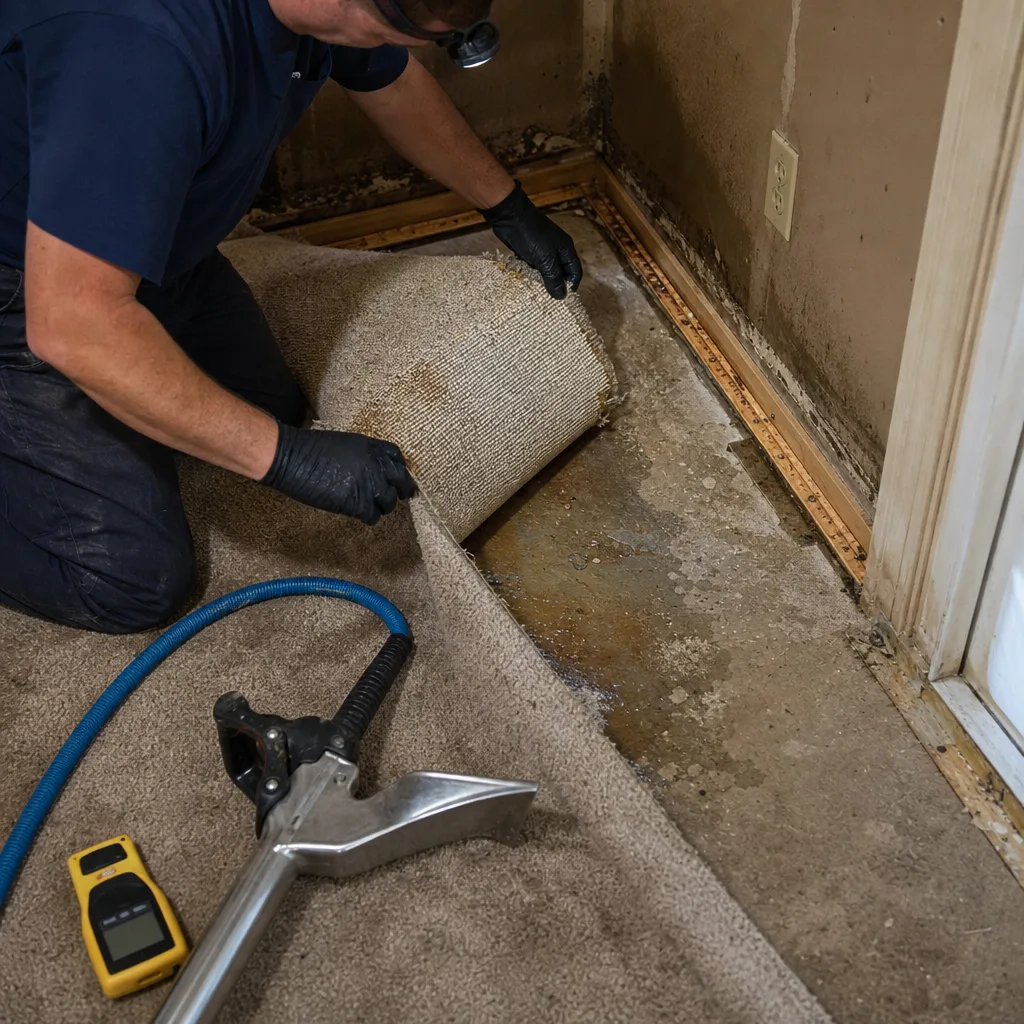
A $30 pin-type moisture meter from any hardware store will handle most homeowner-level assessment. Knowing its limits prevents false confidence and delayed professional response.
Homeowner-Level Measurement
- Surface moisture in drywall, wood, and plaster: Press the pins directly into the material. Read the percentage display. Compare to the material-specific normal ranges listed in the Water Damage section above.
- Relative humidity: Use a digital hygrometer. Place it in the center of the room, away from walls and vents, for 24 hours to get a true reading. Log the high, low, and average.
- Temperature differential at windows and corners: A basic infrared thermometer will show surface temperatures. Compare multiple points on the same wall. Differences of more than 5 degrees indicate thermal bridging or insulation gaps that create condensation risk.
- Water meter baseline: Learn your normal water usage from utility bills. A sustained increase with no changed usage pattern indicates a hidden leak. The measurement is gallons per day above your established baseline.
Professional-Level Detection
- Thermal imaging behind walls: FLIR cameras detect temperature differentials of 0.1 degrees, revealing moisture patterns in wall cavities that no surface measurement can reach. In Hoboken’s plaster-and-lath construction, we’ve identified active leaks traveling 20 feet from their source before any surface indication appeared.
- Psychrometric calculation: Professional drying requires measuring temperature, relative humidity, and specific humidity to calculate vapor pressure differential, the actual driver of moisture movement from wet materials to dry air. This determines equipment selection and placement for effective drying.
- Airborne particle and spore measurement: Air sampling with calibrated pumps and laboratory analysis establishes baseline, contamination level, and post-remediation verification. Spore counts above 1,000 colonies per cubic meter above outdoor baseline typically trigger remediation protocols.
- Structural moisture mapping: For large losses, we create room-by-room moisture maps using penetrating meters, non-invasive scanners, and thermal imaging, documented in daily drying logs that become the evidence base for insurance claims.
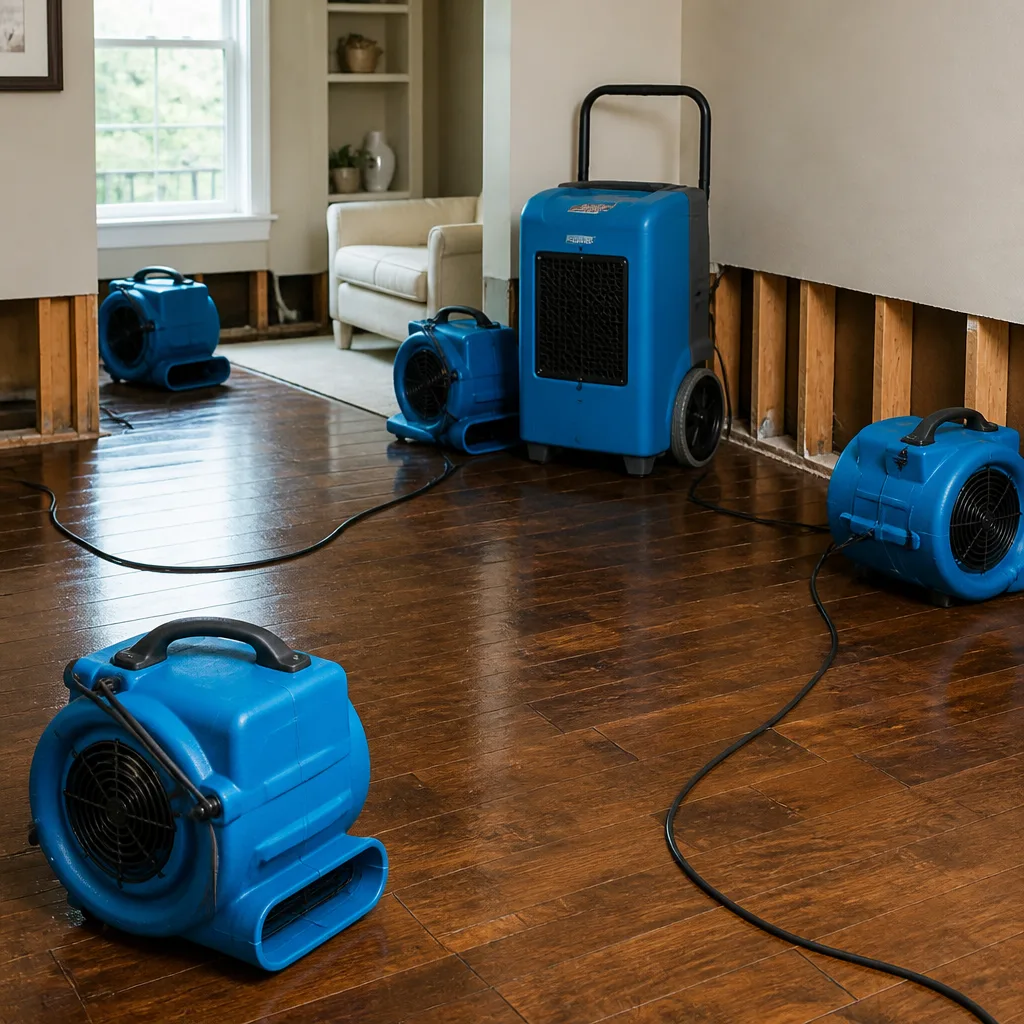
Our equipment inventory includes professional-grade drying systems from Dri-Eaz, Phoenix, XPOWER, B-Air, and Injectidry, with deployment decisions based on psychrometric data, not guesswork. The daily moisture logs we produce turn restoration invoices into claims that adjusters pay without dispute because the documentation answers every question before it’s asked.
Insurance Documentation: Warning Signs That Trigger Your Duty to Report
Standard NJ homeowner policies contain language that limits or excludes coverage for damage that the insurer can attribute to homeowner negligence or delayed discovery. Understanding which warning signs trigger your duty to report protects your coverage position.
The “Prompt Notice” Requirement
Most policies require “prompt” or “immediate” notice of loss, with no fixed hour count. Courts have interpreted this as “as soon as reasonably possible” or “within a time that would not prejudice the insurer’s ability to investigate.” In practice, this means: when you have objective evidence of active water intrusion (moisture reading above 17%, visible standing water, or saturated materials), the clock starts.
Document your discovery with a dated photograph showing the warning sign, the moisture meter reading, and a piece of paper with the date. This creates contemporaneous evidence of when you knew, and that you acted on that knowledge.
The “Delayed Discovery” Exclusion
Hidden damage discovered after a policy period ends, or damage that worsened because the homeowner failed to mitigate, is frequently denied. The warning signs that prevent this denial are your own measurements and documentation. A moisture reading of 19% in a wall, photographed and dated, proves you discovered active damage during the policy period and responded appropriately. The same damage, discovered months later when mold becomes visible, invites the insurer to argue the damage existed before the policy term or that you failed to maintain the property.
Specific Triggers by Damage Type
- Water damage from plumbing: Report when you first observe water where it shouldn’t be, or when a moisture reading confirms active intrusion. Don’t wait for visible mold or structural deformation.
- Storm damage: Report within 24 hours of the event, even if damage appears minor. Roof leaks often travel laterally before appearing inside, and delayed interior damage can be attributed to maintenance failure if not linked to the known storm date.
- Mold: Report when you have moisture confirmation, not when mold is visible. Visible mold may trigger a separate mold sublimit or exclusion; moisture-driven damage is typically covered under the water damage provisions.
- Fire and smoke: Report immediately. Even small kitchen fires with no structural damage can produce smoke residue that requires professional cleaning. The residue is acidic and causes progressive damage; delayed reporting invites arguments that you failed to mitigate.
- Sewage backup: Report immediately. Category 3 water damage has strict mitigation timelines, and failure to respond promptly can result in denial of both the damage and any resulting mold or structural claims.
Our documentation protocol, The Haven Standard, produces the photo records, moisture logs, and written scopes that satisfy adjuster requirements from the first visit. Every job begins with a written price before work starts, Haven Standard Clause 1, so there are no surprises that complicate your insurance position.
The Documentation Habit That Protects Your Claim
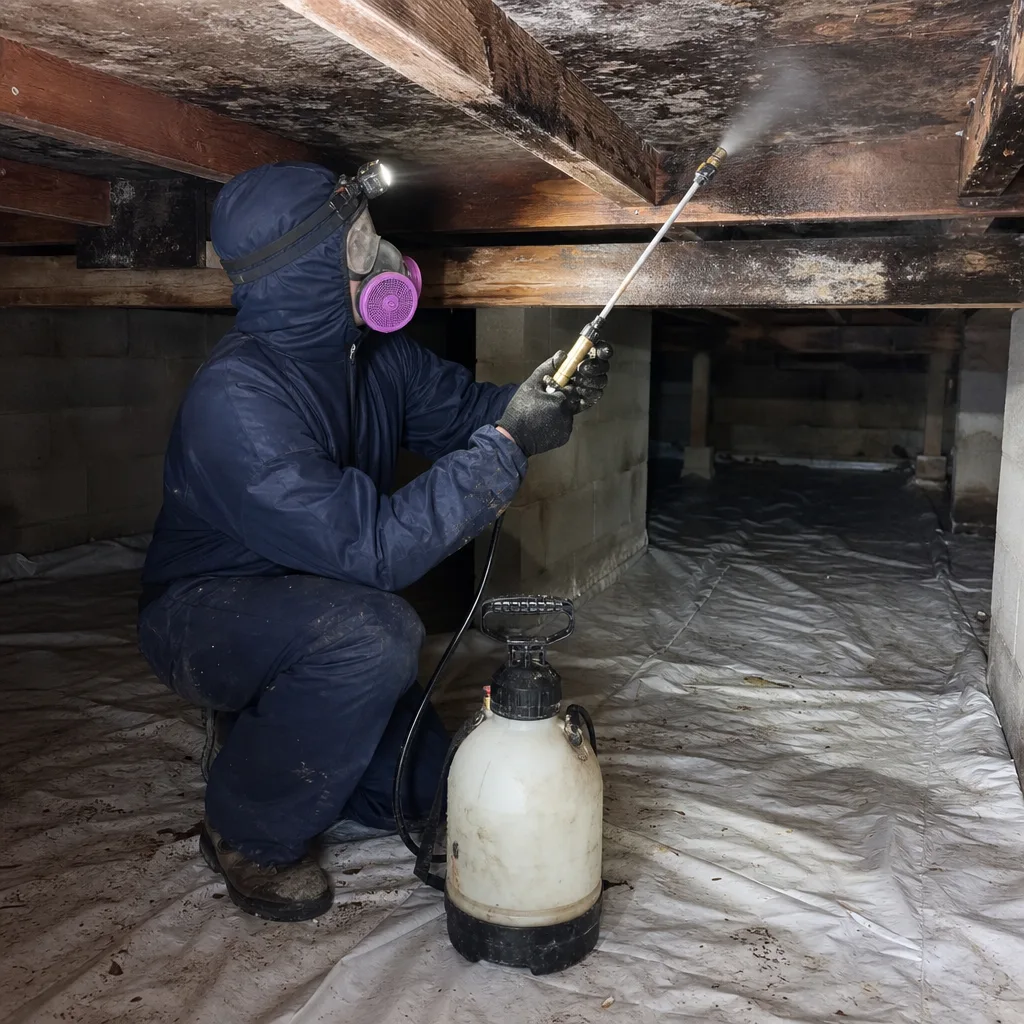
The single most effective practice any Hoboken homeowner can adopt is systematic documentation of warning signs before they become claims. This habit costs nothing and transforms your position in any insurance dispute.
The Three-Photo Method
For any warning sign, take three photographs:
- The warning sign in context: Wide enough to show location in the room, with a recognizable reference point (corner, fixture, window).
- The warning sign with scale: Include a tape measure showing the dimensions of the affected area.
- The warning sign with measurement and date: The moisture meter reading clearly visible, with a piece of paper showing the date handwritten, not digital timestamp alone.
Store these in a dedicated folder, cloud-backed, with filenames that include the date and location: “2025-03-15_BasementNorthWall_Efflorescence_18pct.jpg”. This naming convention makes retrieval instant when an adjuster asks for evidence of discovery date.
The Annual Baseline Record
Once per year, ideally in late spring after thaw season, document your basement perimeter, attic if accessible, and any historical problem areas with moisture readings and photographs. This establishes your property’s normal range and creates evidence of maintenance diligence. If a claim arises, your baseline record proves the damage was sudden and accidental, not gradual deterioration.
The Professional Assessment Threshold
When your measurements exceed these thresholds, call for professional assessment with documentation:
- Drywall or plaster moisture above 17%
- Hardwood or subfloor moisture above 16%
- Relative humidity sustained above 60% for 48+ hours despite ventilation
- Any moisture reading that increases between two measurements 24 hours apart
- Temperature differential of 10+ degrees at electrical outlets
- Any Category 3 water indication (sewage, organic contamination)
Our DryMark Restoration Hoboken home page details our documentation protocols and the equipment we deploy. Every assessment includes a written scope and price before any work begins, with photo documentation as a standard deliverable, never an upsell.
Common Mistakes to Avoid
- Trusting visual appearance over measurement. A dry-looking wall with a 22% moisture reading is actively damaged. A stained wall with an 8% reading is cosmetic. The meter decides, not your eyes.
- Using a non-penetrating meter as definitive. Surface-scanning meters are useful for rapid screening but can be fooled by metal studs, foil-backed insulation, or surface condensation. Confirm with pin-type penetration when readings are elevated or inconsistent.
- Ignoring seasonal baseline shifts. Hoboken’s summer humidity runs 20-30% higher than winter. A reading that would be alarming in January may be normal in August. Compare to your own annual baseline, not a generic table.
- Documenting without scale or date. A photograph of a water stain proves nothing about when it was discovered or how large it was. The tape measure and handwritten date transform a snapshot into claim evidence.
- Waiting for visible mold before acting. Mold grows at moisture readings above 16% with sustained humidity above 60%. By the time it’s visible, the condition has existed for days or weeks, and your insurance position has weakened.
- Attempting DIY drying with household fans. Residential fans move air but don’t control humidity or temperature. Without psychrometric management, you may appear to dry a surface while moisture remains in the substrate, creating conditions for hidden mold growth.
- Accepting verbal estimates for restoration work. Haven Standard Clause 1 exists because verbal estimates lead to scope creep, payment disputes, and denied insurance claims. A written price before work begins is not a preference. It’s the foundation of a documented, defensible restoration.
When to Call a Professional
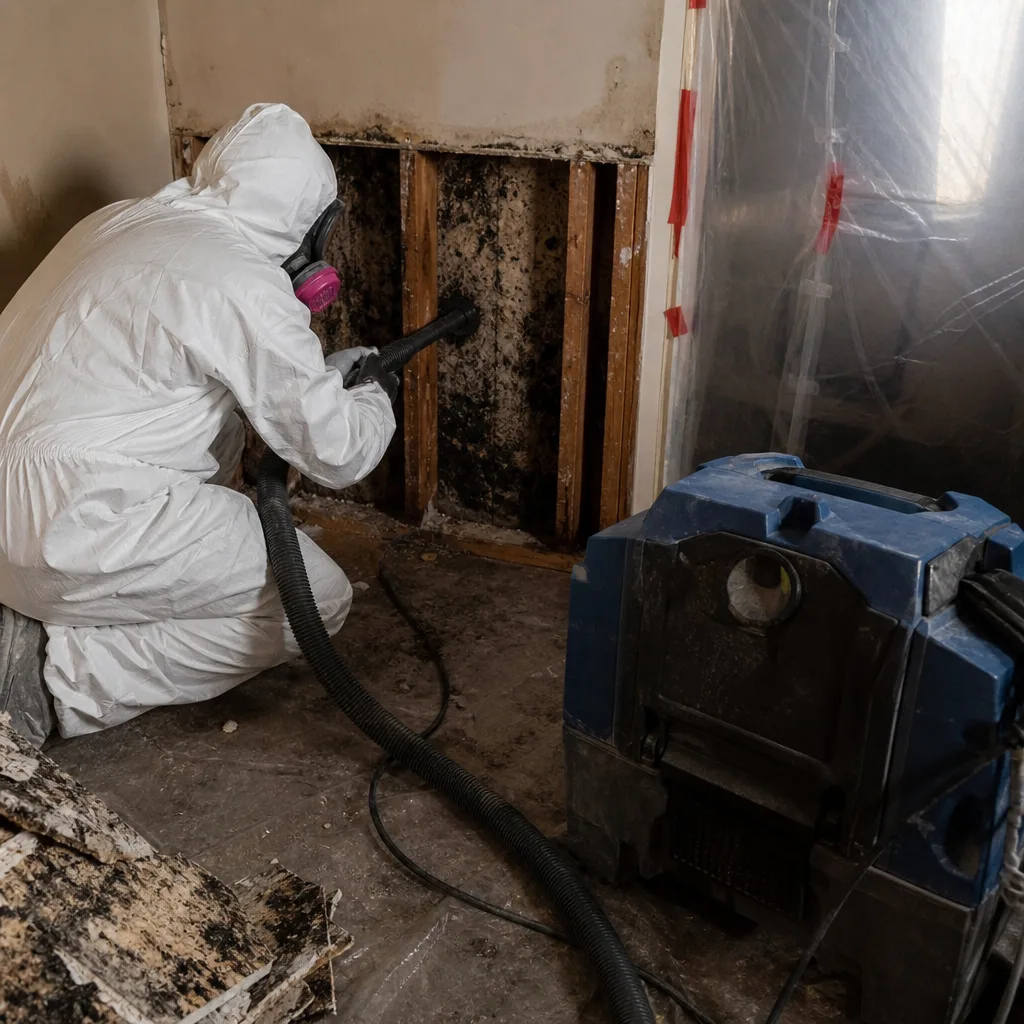
Call a professional when your measurements exceed the thresholds in this guide, when you cannot identify or safely access the moisture source, or when contamination may be present. Call immediately for any sewage backup, electrical heating, or biohazard situation.
DryMark Restoration Hoboken offers free estimates in Hoboken. Our assessments include moisture mapping, thermal imaging when indicated, and a written scope with price before any work begins, every time, with no exceptions. Live phone coverage is available 24 hours a day, 7 days a week with no voicemail on emergency lines. Call (551) 212-1580.
We also provide a Free Second Opinion on any competitor’s written estimate. Bring another company’s scope and price, and we’ll review it at no charge, with documentation of what we agree with and what we question.
Frequently Asked Questions
Professional moisture assessment with thermal imaging and written documentation typically ranges from $150 to $400 for residential properties in Hoboken, depending on property size and the complexity of access. DryMark Restoration Hoboken provides free estimates that include moisture mapping and a written scope with price before any work begins. Call (551) 212-1580 to schedule.
Coverage depends on whether you can prove the damage was sudden and accidental, and that you reported it promptly upon discovery. Your documentation, moisture readings with dates, and the written scope from your restoration contractor are the evidence that determines coverage. Delayed reporting without documentation invites denial under “delayed discovery” or “failure to mitigate” exclusions.
A $30 pin-type moisture meter is sufficient for homeowner-level screening and documentation. It will accurately distinguish active damage (17%+) from historical damage (10% or below) in drywall and wood. Professional thermal imaging and psychrometric calculation are needed for hidden moisture detection and drying protocol design, but your meter is the right tool for initial assessment and insurance documentation.
Live phone coverage is available 24 hours a day, 7 days a week with no voicemail on emergency lines. For active water damage and sewage backup, we dispatch immediately upon agreement of the written scope. For assessment and non-emergency evaluation, we typically schedule within 24 hours. Reconstruction and rebuild work is scoped, scheduled, and priced in writing like any remodeling project, not dispatched for same-day start.
Visible mold on a non-porous surface (tile, glass, metal) with no elevated moisture reading can sometimes be addressed with appropriate cleaning. Visible mold on porous materials (drywall, carpet, ceiling tile, wood) with moisture readings above 16% requires professional remediation with containment, negative air pressure, and documented drying to prevent cross-contamination and recurrence. The moisture reading, not the visibility, determines the appropriate response.
At DryMark Restoration Hoboken, we coordinate directly with your adjuster, providing the daily drying logs, photo records, and written scopes that adjusters need to approve claims efficiently. Our documentation is designed to answer adjuster questions before they’re asked, based on our founder’s experience as a former claims adjuster who built this company around the documentation gap that costs homeowners their claims. You remain the policyholder and decision-maker; we handle the paperwork burden.
The Haven Standard is the documentation and service protocol that governs every DryMark Restoration Hoboken job. Clause 1 requires a written price before any work starts, with no scope-creep additions. Every job includes a documented photo record on every visit, daily moisture logs for drying jobs, and the 365-Day Done Right Promise: if it’s not done right, we make it right, in writing, not as a marketing line. This standard exists because our founder, a former claims adjuster, saw too many homeowners lose claims to incomplete documentation and verbal promises.
The Bottom Line
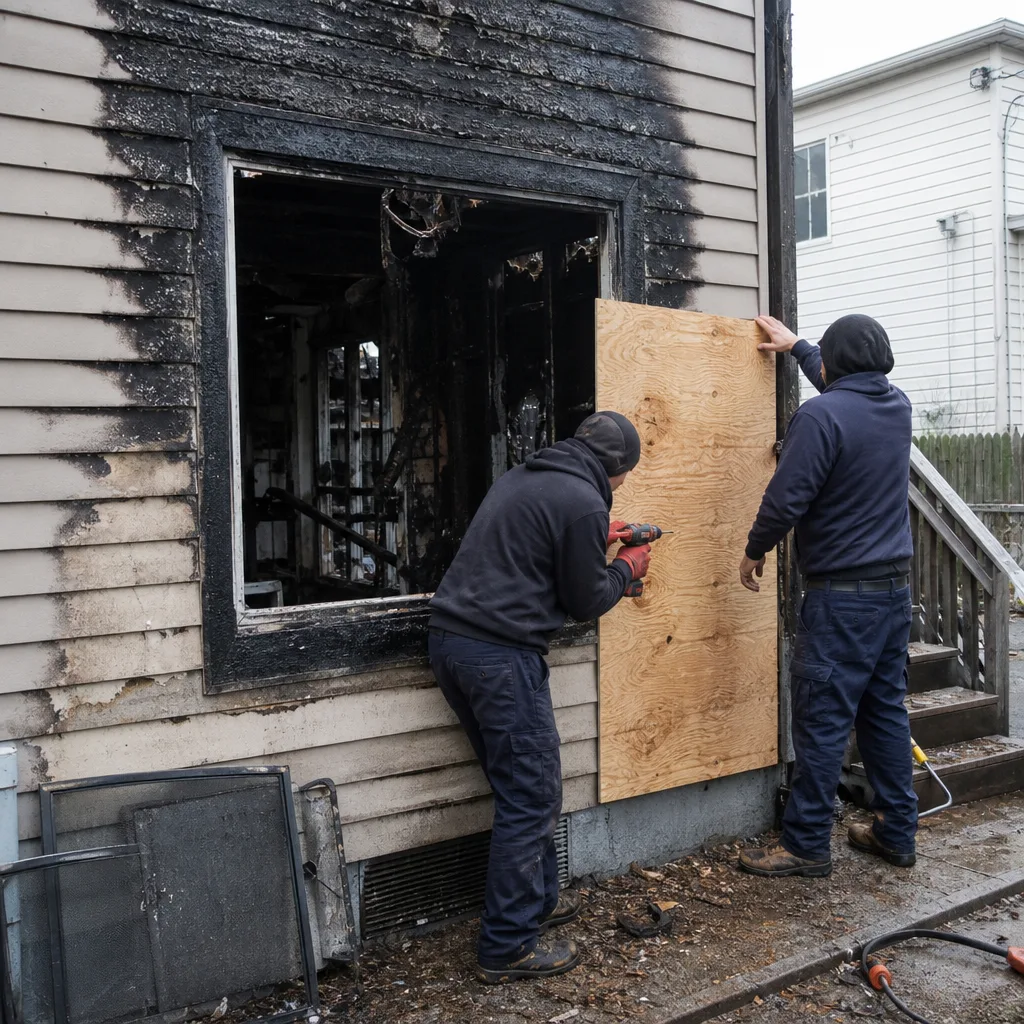
Warning signs in Hoboken homes are not mysteries. They’re measurements waiting to be taken. A stain is history until a moisture meter proves it’s active. A musty smell is speculation until a hygrometer confirms the humidity that sustains growth. The homeowners who protect their property and their insurance claims are the ones who document numbers, not just surfaces, and who demand written scopes and prices before any work begins.
The tools cost less than a dinner out. The habit takes minutes. The documentation, when you need it, is the difference between a paid claim and a denied one. Measure first. Photograph with scale and date. And when the numbers exceed your thresholds, call a professional who will put the same rigor into their documentation that you put into yours.
Written by Alicia Brennan, Owner at DryMark Restoration Hoboken, serving Hoboken since 2011.